
Transplant patients who are given smokers’ lungs are just as likely to survive as those who receive organs from non-smokers, a study has revealed.
Nearly half of recipients were given the lungs of heavy smokers – with a fifth coming from donors who had smoked one packet of cigarettes or more a day for at least 20 years.
But despite this, they were just as likely to be alive for up to three years after transplantation as those who had received non-smokers’ organs.
Astonishingly, some patients even had higher survival rates – with more than 90 per cent of smoking donors’ lungs alive after one year, compared to only 77.7 per cent of non-smokers’ lungs.
The study was conducted at Harefield Hospital in Hillingdon, north west London, where pioneering heart specialist Professor Sir Magdi Yacoub carried out Britain’s first ever heart and lung transplant in 1983.
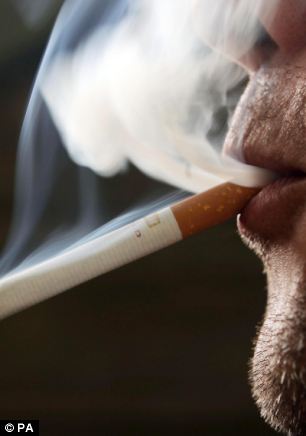
Concern: The use of smokers’ lungs in transplants has sparked controversy – largely because of its perceived risk to patients (file picture) Discovery:
It showed that a total of 237 lung transplants had been carried out over a six-year period since 2007, according to The Independent On Sunday.
Out of these, 90 per cent were double-lung transplants – with 53 per cent of patients receiving organs from non-smokers.
Meanwhile, 47 per cent were given smokers’ lungs, including 18 per cent from donors who had smoked 20 cigarettes or more a day for at least two decades.
The results, reported in the Annals of Thoracic Surgery, showed that survival rates were ‘about the same’ for both groups of patients over one-year and three-year periods.
However, those with lungs from non-smokers had a slightly lower rate in terms of one-year survival.
There was also no difference in the amount of time patients were required to spend in hospital and the overall effectiveness of the lungs.
André Simon, director of heart and lung transplantation and consultant cardiac surgeon at Royal Brompton and Harefield NHS Trust, said heavy smokers’ lungs could provide a ‘valuable avenue for increasing donor organ availability’.
He told the newspaper: ‘Our findings show that such donor lungs may provide a much-needed lease on life to the critically ill patient whose chances of survival diminish with every day or week that passes by on the waiting list.
‘I believe that candidates significantly decrease their chances of survival if they choose to decline organs from smokers’ lungs.’
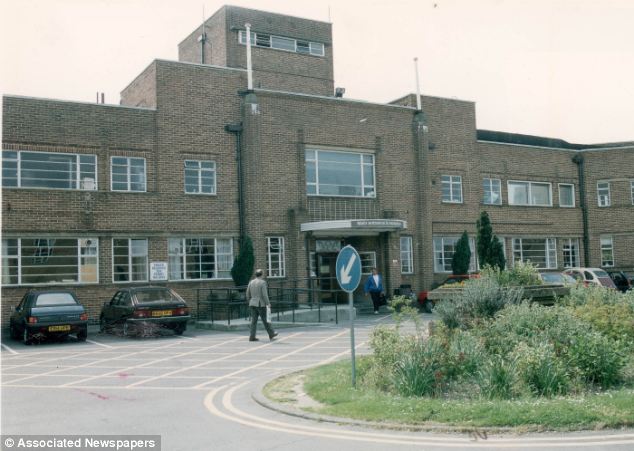
Research site: The study was conducted at Harefield Hospital (pictured) in Hillingdon, north west London
He added that all transplant organs are inspected and assessed by the hospital to ‘ensure maximum quality and safety’, and that smoking-related lung damage varies between individuals.
Lung transplantation is a life-saving operation that is used to treat patients with advanced or end-stage lung disease.
The operation, which can take up to 12 hours, involves removing and replacing a diseased lung with a healthy donor lung.
‘Candidates significantly decrease their chances of survival if they choose to decline organs from smokers’ lungs’
André Simon
The demand for transplants far outweighs demand, yet the use of smokers’ lungs as a solution has sparked controversy – largely because of its perceived risk to patients.
Nevertheless, the outlook for transplant recipients has improved drastically in recent years, with survival figures only expected to increase.
The British Transplantation Society has said that around nine out of 10 people are alive at least a year after transplant, while an estimated half of patients survive for at least five years.
MailOnline has contacted Harefield Hospital for comment.
Source mail Online